How a heat pump actually works
How a heat pump actually works
It sounds complicated. It's not. Here's the honest explanation.
It sounds complicated. It's not. Here's the honest explanation.
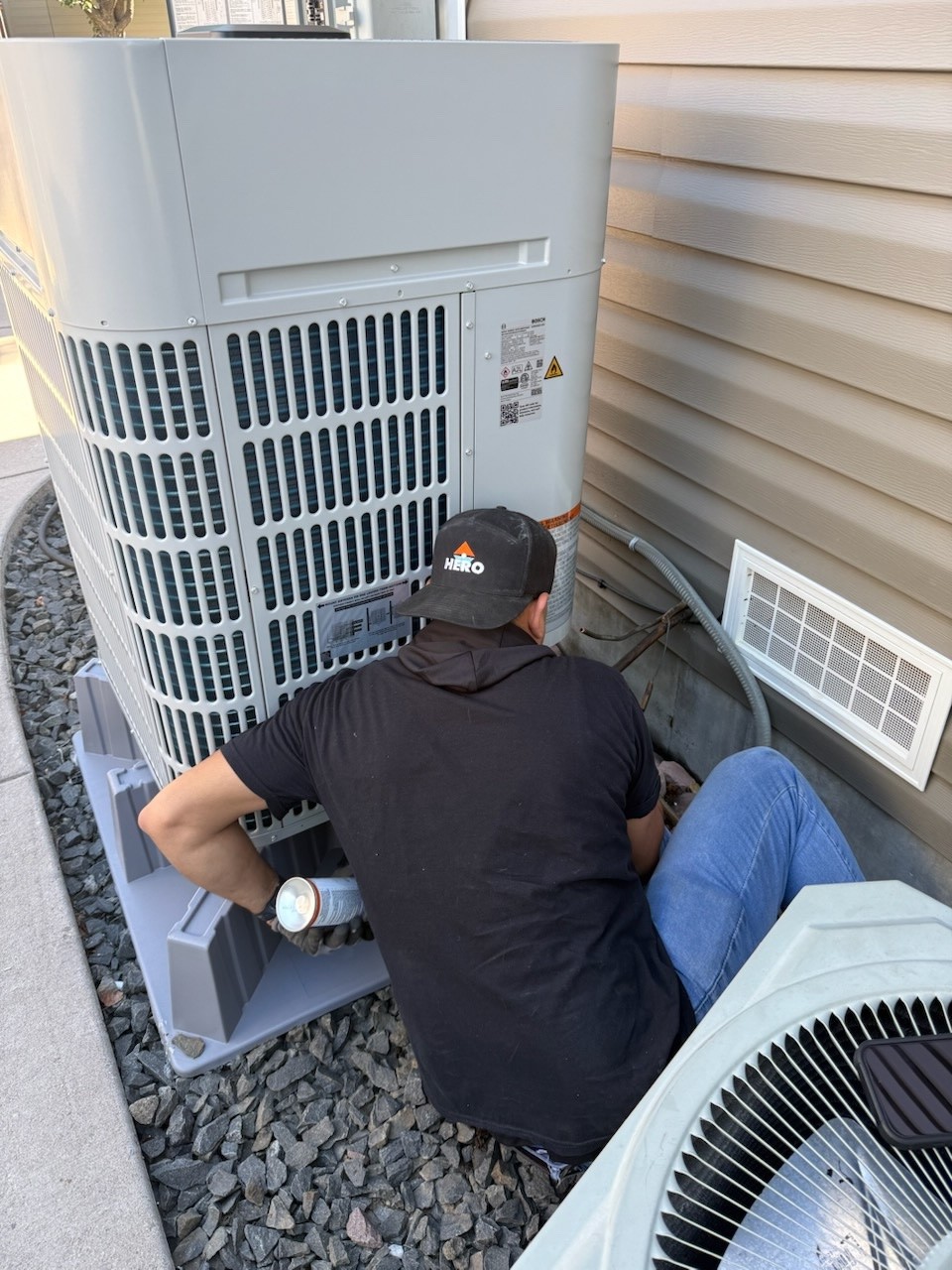
A heat pump works like a refrigerator in reverse. Instead of burning fuel to create heat, it extracts heat energy from the outdoor air — even when it's cold outside — and moves it inside. In summer, the process reverses: it pulls heat out of your home and moves it outside. One system, both jobs.

A gas furnace converts fuel to heat at roughly 90-98% efficiency — that's the physical ceiling. A heat pump moves 2-4 units of heat energy for every unit of electricity consumed. That's 200-400% efficiency. It's not magic, it's thermodynamics — and it's why your energy bills drop significantly after switching.

Early heat pumps struggled below freezing. Modern cold-climate models operate efficiently down to -13°F. Denver's average winter low is around 16°F. Boulder gets colder, but is still well within range. The technology caught up — and then some.

When you install a heat pump, you're replacing both your furnace and your central AC with a single piece of equipment. That means one service call, one maintenance contract, one warranty. And when one system reaches end-of-life, you only need one replacement decision — not two.